Game Developer
Thomas Hunt


Design Experience
Level and Narrative Designer
Here are some examples of my design experience in recent projects. This includes specific levels, entire games, and a wide range of software such as Unreal and Unity.
I have a breadth of experience creating design documents, which you can see here.
IF WE MAKE IT HOME.
Design breakdown - 3D Unreal
Overview
Premise:
-
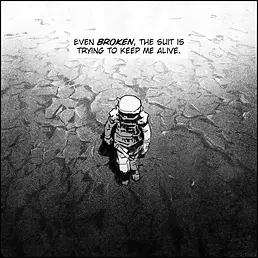
A video game adaptation of ‘The Suit’ by Scott Base
-
Short narrative space thriller
-
Open area, natural environment
-
Closely adapt the original story with voice acting
Key details:
-
Made in Unreal Engine 5
-
Utilising Blueprints
-
To be released on Steam
-
Developed solo
Software used:
-
Unreal Engine 5
-
Adobe Audition
-
Jira for task-board planning
-
Adobe Photoshop and Premiere Pro


Pre-Production
I started pre-production by creating a 1-page design doc. For a smaller title based of a pre-existing narrative, a longer design doc did not seem appropriate.
For this project, I knew I wanted to develop it in Unreal Engine. Prior to this, I had little experience in Unreal, and wanted to develop my skills to become more proficient in multiple game engines.
Key inspirations:
-
Scott Base, ‘Bad Space’ comics
-
Starfield
-
Doctor Who
Production
For this project, I learnt how to effectively use Blueprints in Unreal, something that I had no prior experience in. I am well versed in visual scripting, using a Unity plug-in called Fungus, so this was easier to adapt to.
In order to amplify the narrative of the game, I voice acted all the lines from the original comic, and overlaid a text pop-up to appear correspondingly.
A large amount of focus had to be put on the sound design of the project. In order to successfully adapt the source material, and accentuate the gruesome nature, I used Adobe Audition to modify royalty free sounds online to be even more visceral.
Developing IF WE MAKE IT HOME. was a great way for me to effectively learn Unreal engine and blueprints, creating a fully playable short game, and adapting an existing work to a new medium.


Learn more here:
Fireside Fables - Pirate Town
Design breakdown - 3D Unity
Overview
Premise:
-
Pirate town level for Fireside Fables
-
Part of the larger Pirate world
-
Fireside Fables is a 3D narrative adventure game, about journeying through children's imaginations.
Key details:
-
Made in Unity
-
My role on the project included Lead Designer
-
Developed as part of a multi-disciplined team, InkForge Studios
Software used:
-
Unity
-
Blender - 3D Animations
-
Excel for task-board planning
-
Adobe Photoshop and Premiere Pro


Pre-Production
As a team, we started working collaboratively on a shared canvas, showing different ideas and inspirations for the entire pirate world. This is where the idea of a pirate town started.
Thanks to earlier work from the 3D artists on the team, we already had a lot of pre-existing assets to work with. This helped streamline early pre-production, mitigating the need for strict greyboxing.
This allowed me to start with terrain sculpting, with a key focus on the golden path.
Production
This scene's main purpose is a slower-paced bridge between minigames and other scenes within the pirate world. This meant reduced difficulty and a higher focus on NPC interactions and hidden secrets for the player to find.
As the game is targeted at children, a good idea was sticking within typical tropes of both video games and pirates. One way this manifested was with a hidden area behind the large waterfall in the scene.
With the lower difficulty, it meant that the environment itself had to be more engaging for the player to traverse. In order to achieve this, I created a wide range of animations for the pirates to have. This allowed for a more dynamic feeling scene, without a huge workload added for the 3D artists.
The creation of this level was helpful for me to practice the process of taking ideas from concept to reality, using a wide range of inspirations.


Learn more here:
I'll be Brave, Tomorrow - Autumn levels
Design breakdown - 2D Unity
Overview
Premise:
-
Autumn levels in I'll be Brave, Tomorrow (IBBT)
-
Introduced a new enemy, the wasps
-
Mid-way through the game, medium difficulty
-
IBBT is a 2D narrative platformer, about a sick child in hospital playing an SNES inspired platformer on their TV.
Key details:
-
Made in Unity
-
My role on the project included Level Designer and environment 2D artist
-
Developed as part of a multi-disciplined team, InkForge Studios
Software used:
-
Unity
-
Aseprite for Pixel art
-
Trello for task-board planning
-
Adobe Photoshop and Premiere Pro


Pre-Production
The 2D levels in IBBT were split up by season, starting with Summer and ending with Spring. When we started work on Autumn, we had already finished Summer, so we knew the season had to include 5 levels and a boss fight, in order to feel in line with the previous season.
We also wanted to introduce a new enemy - the wasps. I programmed the wasps to follow the players position, and hurt the player when colliding.
Narratively, the world was to get more bleak over the course of the levels, to reflect the deteriorating medical state of the child in the hospital room.


Production
A key focus for the design of the levels and balancing of difficulty was to slowly ease the player into the mechanics that would later feature in the boss fight with the Queen Wasp.
For example, when you first meet the wasps, you have to simply avoid one at a time. Then you are faced with multiple at once, with them taking turns attacking you with visible attack lines. Finally, this culminates with a mechanic in the boss fight where the queen can summon waves of wasps to attack you.
These levels were a great learning experience for me to learn how to effectively tutorialise enemies and mechanics for players, especially for a younger target audience.


